Best Web Hosting for Small Business in 2026: Costs, Renewals & Trade-Offs

Quick verdict: Choosing the best web hosting for small business depends on your workload, renewal budget and support needs. For a US small business running one or several ordinary WordPress or brochure websites, DreamHost Web Hosting Growth is a practical balanced annual option when daily backups and visible renewal pricing matter. IONOS Plus has the lowest modeled 36-month hosting-only cost among the three directly comparable 12-month introductory offers. SiteGround GrowBig makes sense for owners prioritizing WordPress staging and collaboration; Hostinger Unlimited is attractive for those comfortable paying 48 months upfront; WP Engine Essential targets businesses that value a managed WordPress platform. These are conditional recommendations, not measured speed winners.
Evidence note (US market, checked November 1, 2026): All dollar amounts are publicly advertised rates, not completed personal checkout quotes. Upfront commitments, tax, domain renewal, business email and paid extras can change the bill. No HostChoices firsthand hosting tests or matched independent speed/uptime benchmarks were supplied.
Best web hosting for small business: quick comparison

| Best fit | Plan | Starting commitment | Most important trade-off |
|---|---|---|---|
| Balanced annual shared hosting | DreamHost Web Hosting Growth | $47.88 for 12 months | Email trial ends; $12.99/mo published renewal |
| Lowest modeled annual-plan cost | IONOS Plus | $12 for 12 months | Renews at $14/mo after first year |
| WordPress workflow and staging | SiteGround GrowBig | $59.88 for 12 months | 12-month renewal $29.99/mo |
| Four-year prepaid budget | Hostinger Unlimited | $167.52 for 48 months | Long commitment; year-one extras may expire |
| Managed WordPress operations | WP Engine Essential | $336 for 12 months | Exact renewal quote not established |
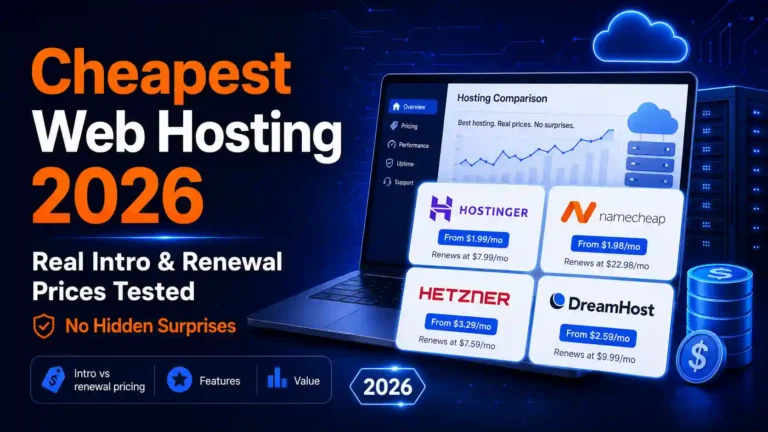
Choosing only by the lowest advertised monthly figure is risky. A $1/mo special that renews at $14/mo is a very different financial commitment from a $3.49/mo offer requiring four years prepaid. Shared hosting also does not offer the same management scope as a specialist managed WordPress service.
How we assessed the five providers
Our editorial selection favors transparent real-world buying decisions over promotional rankings. The original briefing suggested a weighted rubric—35% long-term value, 25% essential operations, 20% usability, 10% support terms and 10% upgrade path. But an exact 0–100 ranking would require identical, validated measurements and mapped grades for every category. Because those measurements are unavailable, this article uses a qualitative evidence matrix and scenario-based recommendations instead of invented numerical scores.
| Evidence | What it supports | What it does not establish |
|---|---|---|
| Official US plan and renewal pages | Advertised price, term and listed features | Final tax-inclusive checkout or future price |
| Calculated 36-month scenarios | Cost if published renewal assumptions hold | Contractually guaranteed three-year cost |
| Provider backup/support claims | Scope described by provider | Actual restore success or support response speed |
| No matched benchmark dataset | No defensible speed/uptime ranking | Any provider being “the fastest” |
The shortlist spans shared hosting, a long-term prepaid shared-style offer and managed WordPress hosting. Those categories are intentionally shown together to help buyers decide what to buy—not to imply that their resources or services are identical.
Current US hosting prices: upfront payments and renewals

| Plan and initial term | Advertised rate | Pay upfront, ex. tax | Published renewal |
|---|---|---|---|
| DreamHost Growth — 12 mo | $3.99/mo | $47.88 | $12.99/mo (12-mo renewal) |
| IONOS Plus — 12 mo | $1.00/mo | $12.00 | $14.00/mo after promo |
| SiteGround GrowBig — 12 mo | $4.99/mo | $59.88 | $29.99/mo for 12-mo term |
| Hostinger Unlimited — 48 mo | $3.49/mo | $167.52 | $16.99/mo renewal equivalent after term |
| WP Engine Essential — annual | $28.00/mo | $336.00 | Exact renewal not verified |
These figures are monthly equivalents for prepaid commitments, not permission to pay month by month. Providers may change offers, apply taxes and add ons, and price renewals by contract length. The table is a dated shopping comparison, not a guarantee of checkout eligibility.
The 36 month cost model and why payment terms matter
For three offers with a 12-month introductory term, an apples-to-apples planning scenario is: first 12 months at the current promotional monthly equivalent + the next 24 months at the currently published applicable standard equivalent. This is a transparent model, not a fixed three-year contract.
| Scenario | Year 1 paid | Months 13–36 assumed | 36-month model |
|---|---|---|---|
| IONOS Plus: $14/mo after year 1 | $12.00 | $336.00 | $348.00 |
| DreamHost Growth: $12.99/mo | $47.88 | $311.76 | $359.64 |
| SiteGround: two 12-mo renewals at $29.99/mo | $59.88 | $719.76 | $779.64 |
| SiteGround: one 24-mo standard term at $24.99/mo | $59.88 | $599.76 | $659.64 |
The alternative SiteGround calculation matters. Its official standard-rate schedule lists GrowBig at $29.99/mo on a 12-month term and $24.99/mo on a 24-month term. Choosing a 24-month contract for months 13–36 could reduce the modeled amount by $120 if the same rate and eligibility apply; only an actual account renewal offer can confirm the payable amount.
Hostinger Unlimited is not a 36-month contract in the offer cited here: the buyer pays $167.52 for the entire first 48 months. That cash commitment covers month 36, but comparing $3.49 × 36 with the three annual-plan totals would understate the upfront payment. WP Engine Essential has a verifiable $336 first-year bill; without a reliable exact renewal quote for that starting configuration, a fixed 36-month dollar figure would be fabricated.
The smallest modeled difference among the directly comparable annual hosting offers is just $11.64 over three years between IONOS and DreamHost. Domain/email policies, workflow needs and renewal eligibility can easily outweigh that narrow hosting-only gap.
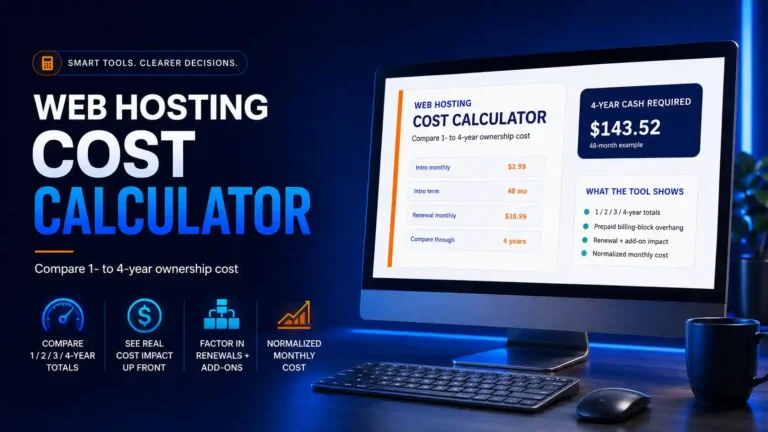
To compare upfront payments, renewal billing cycles, and total hosting costs beyond these 36-month scenarios, use our web hosting cost calculator to model hosting expenses over 1–4 years.
Five plans in detail: who should choose or skip each?

1. DreamHost Web Hosting Growth a balanced annual option
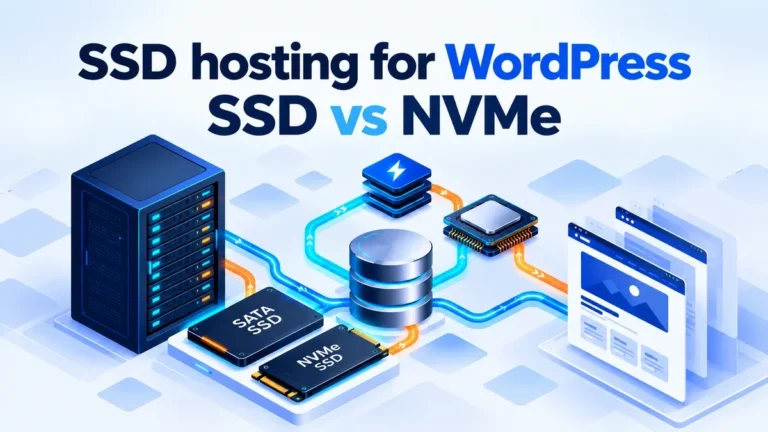
Price: $3.99/mo equivalent on a 12-month initial term ($47.88 before tax), with $12.99/mo listed for renewal after the first year. Its published plan includes 50 websites, 50 GB NVMe storage, daily automated backups, SSL, a first-year eligible domain and a three-month professional-email trial covering up to 40 mailboxes. Traffic and site counts must be interpreted alongside shared-hosting resource policies.
Best for: a local services website, modest agency portfolio or business blog that needs backup coverage and an annual decision point without a 48-month lock-in. Not ideal for: an owner who must have ongoing business email at no added cost, application-level resource guarantees, or specialist WordPress staging included.
The key buyer question is whether the backup restore process and the post-trial email cost meet your operating needs. Published feature inclusion does not prove a successful restore or uptime in your location.
2. IONOS Plus lowest modeled three-year hosting-only cost
Price: $1/mo equivalent for the first 12 months ($12 upfront before tax), then a published $14/mo after the promotional year. On that assumption, the 36-month hosting-only model is $348. The official plan comparison advertises 350 GB NVMe storage, four email addresses, access to additional shared-server resources and a CDN, subject to the product’s limits and conditions.
Best for: an owner prioritizing the first-year cash bill and needing bundled mailboxes. Not ideal for: someone who wants a constant $1/mo expense, who assumes “unlimited” represents guaranteed compute resources, or who dislikes a larger second-year bill.
Even here, a few dollars of hosting-only savings is not the entire choice: compare the actual included mailbox configuration, backup restoration and administrative experience with what your business needs.
3. SiteGround GrowBig WordPress workflow over minimum cost
Price: $4.99/mo equivalent prepaid for one year ($59.88), with a published $29.99/mo standard rate for a 12-month period. The provider lists 50 GB storage, daily backups, free SSL, CDN, email, managed WordPress updates, staging and collaboration features. “Unlimited sites” and “unlimited traffic” remain subject to finite plan resources and use policies.
Best for: a business owner, designer or small agency actively maintaining several WordPress properties, where staging and delegated access reduce operational mistakes. Not ideal for: the price-sensitive brochure site that does not need these tools.
A crucial distinction from the original draft: the publicly posted standard rate is lower when prepaid for 24 months ($24.99/mo). Compare both eligible renewal terms before deciding; the result changes the 36-month scenario from $779.64 to $659.64, though neither is a guaranteed future checkout quote.
4. Hostinger Unlimited long-term budget with a 48-month commitment
Price: $3.49/mo equivalent, but the listed offer requires a $167.52 payment for 48 months. The advertised renewal equivalent is $16.99/mo after that initial term, with the renewal billing commitment to be confirmed at checkout. The provider lists 50 GB NVMe storage, daily backups, CDN and WordPress tools; its unlimited website/mailbox language is restricted by fair-use and resource conditions, and the mailbox benefit is offered free for the first year.
Best for: a small organization confident that it will keep this website arrangement for four years and comfortable committing the cash now. Not ideal for: a startup still deciding between WordPress, a SaaS builder and custom development, or anyone wanting annual flexibility.
Do not mistake a long prepaid hosting term for a four-year included domain or email term. Plan separately for renewals or paid mailbox services after the first year.
5. WP Engine Essential managed WordPress rather than cheap shared hosting
Price: the US official page advertises Essential from $28/mo when billed annually—$336 paid at purchase. It describes automated daily backups, SSL, 24/7 chat and management of WordPress, PHP and MySQL. Essential is a plan family with configurations; individual capacity and add-ons depend on the selected package.
Best for: a business with an important WordPress property and a real preference to outsource part of the operational workload. Not ideal for: non-WordPress applications or a basic brochure site where a less expensive shared plan meets technical and business requirements.
Renewal uncertainty: the exact renewal charge for the advertised starting configuration was not established from an unambiguous checkout or contract. Do not infer that the first-year annual rate repeats. Get a written or account-specific renewal quotation before projecting multi-year costs.
How to choose by the type of small business
| Business situation | Start by comparing | Decision threshold |
|---|---|---|
| Single local service website | DreamHost Growth, IONOS Plus | Backup/restore access, email, renewal total |
| Multiple WordPress sites or staff editors | SiteGround GrowBig, DreamHost Growth | Staging, collaborators and site limits |
| Long-term simple website, stable needs | Hostinger Unlimited | Willingness to prepay 48 months |
| WordPress is operationally critical | WP Engine Essential, SiteGround GrowBig | How much platform management is delegated |
| Custom application, changing compute demand | Exact VPS/cloud configuration | RAM/CPU and operator responsibility; outside this ranking |
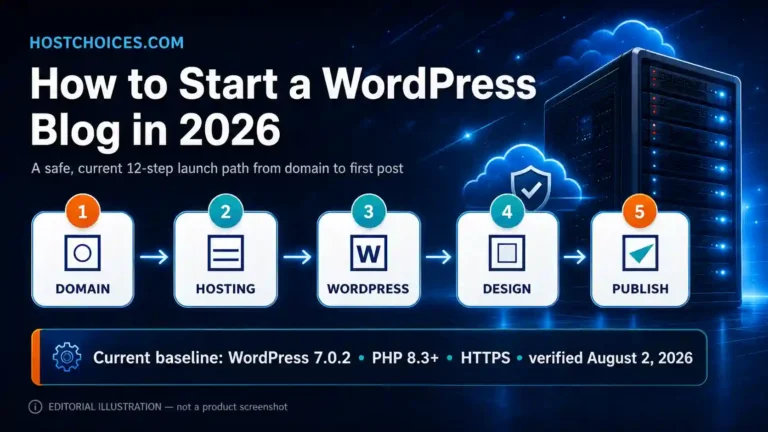
For a business still choosing its platform, consult our web hosting decision guide first. For an existing WordPress site that feels slow, follow the WordPress speed optimization checklist to diagnose bottlenecks before paying for a hosting upgrade.
Small business hosting checklist: seven questions before checkout
- What is the total upfront charge at the chosen term, including taxes?
- What exactly happens at renewal, and will the same term be required?
- Does the plan include the number and duration of business mailboxes you need?
- How often are backups stored, how long are they retained, and who can restore them?
- What are the real CPU, memory, storage, inode, PHP-worker or acceptable-use limits where disclosed?
- Does support cover WordPress application fixes, migration, DNS and email, or only the hosting layer?
- Can you export files and databases and leave without losing business email or a domain name?
For an online store or booked-service business, add payment gateway compatibility, staging, the backup restore target, incident communication and an explicit escalation path. No shared-hosting marketing guarantee substitutes for testing a complete checkout or booking journey.
Shared hosting vs managed WordPress vs VPS: do not compare the labels as equals
Shared hosting means multiple customers use common infrastructure under account-level restrictions. It is often cost-effective for small brochure sites and WordPress blogs, but does not provide dedicated CPU or guaranteed performance by default. Managed WordPress adds a provider-defined operational scope for WordPress-specific software, updates, security or backups; management levels vary. VPS or managed cloud introduces virtualized server resources and often greater configuration control, with responsibility depending on the managed/unmanaged contract.
A generic “99.9% uptime guarantee” is a contractual promise subject to exclusions, not proof of a measured 99.9% past uptime record. Speed depends on workload, server region, caching, plugins and visitor conditions. This guide does not rank vendors by speed or historical availability because no matched, date-documented measurements were supplied.
Frequently asked questions
Is $1/month hosting really $1 every month?
No. IONOS Plus advertises a $1/mo equivalent for the first 12-month term, not a permanent $1 monthly subscription. Its currently published rate after that promotional year is $14/mo, subject to the final offer and any later changes.
Is the lowest 36-month modeled price automatically the best value?
No. The hosting-only $348 IONOS and $359.64 DreamHost scenarios are only $11.64 apart over three years. The domain, email, backup policy, administrative workflow, eligibility and future renewal terms may matter more than that difference.
Does Hostinger’s $3.49/month offer cost only $125.64 for three years?
No. The advertised offer involves $167.52 prepaid for 48 months. Multiplying $3.49 by 36 creates an accounting allocation, not the required cash payment at checkout. That difference matters when comparing companies with annual terms.
Can a provider uptime guarantee replace my backup plan?
No. Availability service-level agreements typically describe service availability and remedies; they do not promise recovery of all application data or reimburse every business loss. Check backup frequency, retention, restore responsibilities and exclusions separately.
What should I prioritize for a WordPress business site?
Check software compatibility, backup restoration, staging for risky changes, support scope, site-level access and pricing at renewal. A costlier managed platform is worthwhile only when those operational benefits justify the premium.
Final verdict: choose the right cost structure and management scope
For an ordinary small-business site seeking a reasonable annual balance, DreamHost Growth is a sensible shortlist leader—but not a laboratory-proven universal winner. IONOS Plus is the lower-cost choice under the stated 36-month annual-plan scenario. SiteGround GrowBig earns consideration when staging and WordPress workflows matter, especially after comparing its 12- and 24-month standard rates. Hostinger Unlimited favors buyers able to commit 48 months upfront; WP Engine Essential targets WordPress operations rather than minimum hosting cost.
Compare the actual checkout bill, renewal term, backup and email obligations before committing. An exact quote that includes the business features you need is more useful than a promotional per-month figure.
Editorial disclosure: This edition uses direct, non-affiliate links to providers’ official plan pages. Recommendations are not determined by referral commissions.